Blog

  • Three Lessons from My First Year of Vegetable Gardening

    Hi all, Amy here. This past year I finally turned a corner of the backyard into a vegetable garden, and it taught me more than I expected. I wanted to share a few things I learned in case anyone else is thinking about getting started.

    First, start small. I was tempted to plant everything at once, but a few tomato plants, some herbs, and a row of lettuce were plenty for a first season. Second, water in the morning rather than the evening, which helped keep the leaves healthy. And third, keep a simple notebook of what you planted and when, because next spring you will be grateful for the reminders.

    It was not always tidy and not everything survived, but harvesting that first ripe tomato made all the effort worth it. Happy gardening!
  • Why Skateboarding Is the Best Way to Spend an Afternoon

    Hey everyone, Liam here! I wanted to share why skateboarding has become my favorite thing to do after school. There’s nothing quite like the feeling of finally landing a trick you’ve been practicing for weeks.

    If you’re just starting out, my biggest tip is to wear a helmet and don’t get discouraged. Everybody falls at the beginning. Start with the basics like balancing and pushing off, then work your way up to ollies. Find a local skate park and watch how other people ride, because you can learn a ton just by paying attention.

    Thanks for reading, and I’ll see you out there!

  • WordPress Still Powers Over 40% of the Web

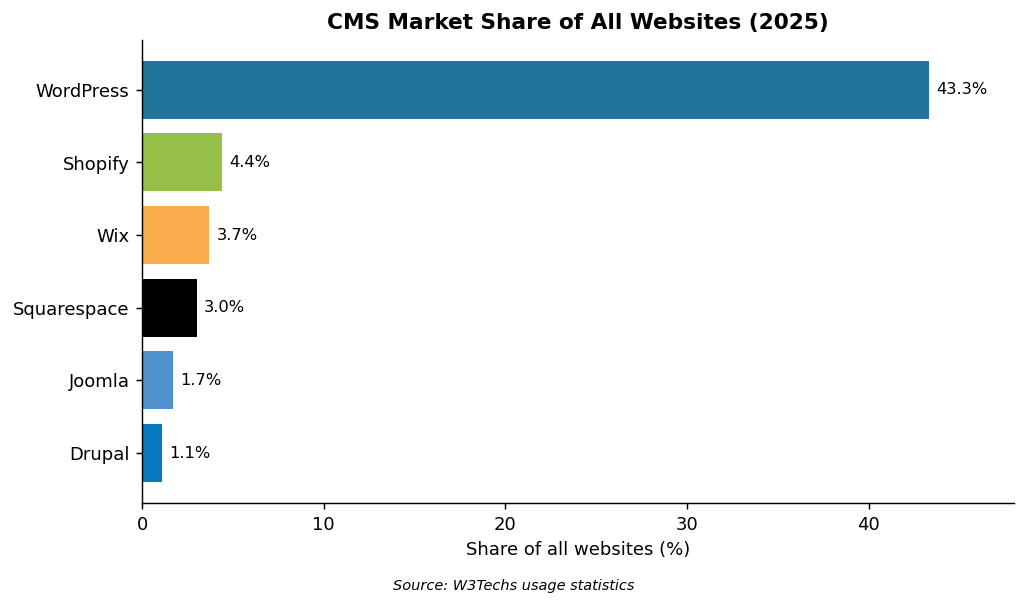
    WordPress is still running the show in the CMS world, powering about 43% of all websites worldwide according to W3Techs usage data. If you only count sites that use a CMS people can identify, its share climbs even higher — well past 60%.

    Bar chart of CMS market share of all websites in 2025, with WordPress far ahead at 43%

    The numbers really drive home how far ahead WordPress is. Hosted builders like Wix and Squarespace have grown steadily with beginners, and Shopify leads when it comes to dedicated e-commerce, but none of them come close to WordPress’s overall reach. Its open-source license, huge plugin and theme ecosystem, and low barrier to entry keep it the go-to choice for everybody from hobby bloggers to major publishers. Like the chart above shows, the gap between WordPress and everyone else is measured in tens of percentage points, not single digits.

  • Drupal 11 Released: A Modern Foundation for Ambitious Sites

    Drupal 11, the newest major release of the enterprise-focused open-source CMS, brings a leaner core and a more modern experience for developers. The release keeps Drupal moving toward an API-first, “composable” setup, updating its underlying dependencies and pulling out long-deprecated code.

    Some of the highlights: a refreshed default theme, better automatic updates, and Recipes — a system for packaging configuration so site builders can spin up common features in a hurry. Drupal’s leadership has been focused on making the platform easier for newcomers without giving up the flexibility and security that big institutions count on. For the governments, universities, and large companies that make up Drupal’s core audience, this upgrade backs up its spot as the CMS to reach for on complex, high-security projects.

  • Watch: Getting Started with the WordPress Block Editor

    Ever since WordPress 5.0 launched the Gutenberg block editor in December 2018, the old “classic editor” has given way to a modern, block-based way of writing. Every paragraph, heading, image, or embed is its own block that you can move, style, and reuse.

    If blocks are new to you, the tutorial above walks through the basics — adding and rearranging blocks, using the settings sidebar, and putting together a simple layout. Full Site Editing, which came in with WordPress 6.0, takes that same block idea and applies it to headers, footers, and templates, so you can design a whole site visually without touching any code.

  • Hosted Builders Surge: Wix and Squarespace Keep Winning Over Beginners

    Hosted website builders keep pulling in first-time site owners who’d rather not deal with their own hosting, updates, or security. Wix, with more than 200 million registered users, and Squarespace, a longtime favorite of creatives and small businesses, lead the pack here.

    The appeal is pretty simple: sign up, pick a template, drag things into place, and publish — all without installing any software. The trade-off is control. Unlike open-source platforms like WordPress, Drupal, and Joomla, these proprietary services keep your site locked to their infrastructure, and Wix famously won’t let you switch templates after you publish. For a lot of beginners and small businesses, though, the convenience is well worth it.

    Note: comments are turned off on this post.

  • Joomla 5 Brings a Cleaner, Faster Experience to the Veteran CMS

    Joomla 5 is a big modernization for the veteran open-source CMS that first showed up in 2005 as a fork of Mambo. The release bumps up the minimum PHP requirement, cleans up the codebase, and improves performance and accessibility across the admin interface.

    Joomla has always lived in the middle ground between WordPress’s simplicity and Drupal’s power, with strong built-in multilingual support and fine-grained access control. Version 5 leans into that identity, with a more streamlined setup and better tools for handling structured content. If you’re running a membership site, a community portal, or multilingual content, Joomla 5 is a refresh worth looking at.

  • The Big Brands Behind Each CMS

    One of the best ways to size up a CMS is to look at who trusts it. WordPress runs a huge mix of well-known sites, from major news outlets and celebrity blogs to university departments and small businesses. Drupal has historically powered high-profile government and institutional sites — including whitehouse.gov for a stretch — thanks to its security and ability to scale.

    Joomla is behind plenty of community and membership sites around the world, while the hosted builders have their own success stories: Squarespace is a favorite of photographers, restaurants, and creative portfolios, and Wix and Weebly host millions of small-business sites and online stores. Looking at the brands behind a platform is a quick, practical way to figure out what each CMS is actually good at.